How Good Design Can Make Us Fall in Love with Public Spaces Again
What We Really Need From Public Libraries: How Good Design Can Make Us Fall in Love with Public Spaces Again
Americans overwhelmingly agree that the public library system is a valuable part of civic life, however, very few regularly visit their local branch. While libraries across the nation are faced with many challenges today (inventory maintenance, politics, societal expectations, etc.), it seems the greatest challenge is getting people to come to and use a shared, public space.
Across the board, our towns and cities are seeing a lessening of crowds in spaces designed for public use including libraries, movie theaters, and brick-and-mortar stores. While many consumers feel that digital access to such commodities is easier and public spaces lack appeal, there’s a parallel tension growing in the loneliness felt by many who spend so much time at home—working, schooling, or socializing remotely.
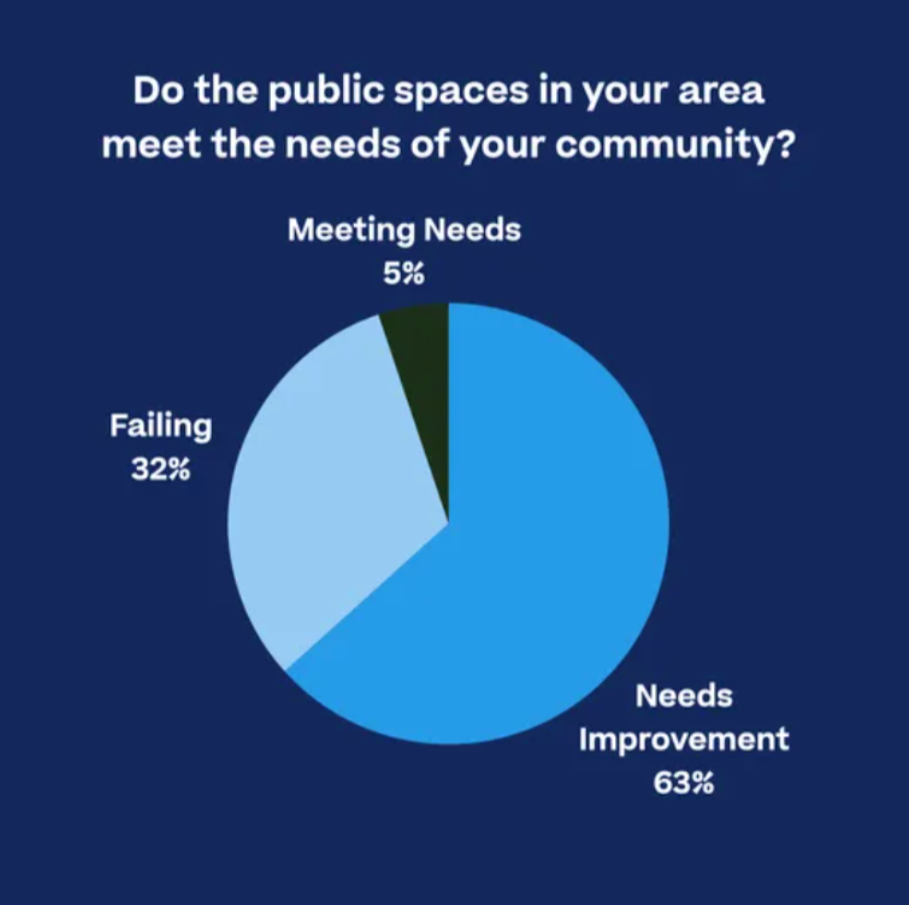
Figure 1. Data from the Project for Public Spaces, “The State of Public Space in 2025” survey.
The concept of the “third place”—a social setting outside of a person’s home (considered the “first place”) and their place of work (the “second place”)—was coined by sociologist and author, Ray Oldenburg, in his book The Great Good Place. His idea suggests people benefit greatly from a “third place,” where they can connect, build, and engage with their community. Traditionally, the local church has served as a “third place” for many Americans. For others, it may have been a favorite coffee shop, skate park, or corner record store. But today, public spaces designed for lingering, are decreasing. The “third place” is in jeopardy for many Americans, particularly in a post-pandemic world where work and school, common “second places,” are being lost to remote or digital settings.
The public library system, however, is uniquely positioned to solve this, providing an ample opportunity to fill a void in the lives of many local residents. Beyond books or digital services, libraries need to rethink their role in modern society. They need to be somewhere people want to be. This is achieved not by expanding inventories but through thoughtful design.
By creating beautiful, smartly designed spaces that people want to be in—spaces that feel safe, inspiring, and tailored to their specific location—libraries can increase their relevancy to the community, meeting modern needs, while promoting quality of life and civic pride.
What We Really Need From Public Libraries
Placemaking defines a people-centered approach to design where spaces are built to foster connections and inspire civic engagement. Project for Public Spaces explains this saying, “[Beyond] better urban design, placemaking facilitates creative patterns of use, paying particular attention to the physical, cultural, and social identities that define a place and support its ongoing evolution.” This is not a new idea, but one that if applied to public libraries, can unlock value across the nation, meeting existing needs and promoting a stronger quality of life.
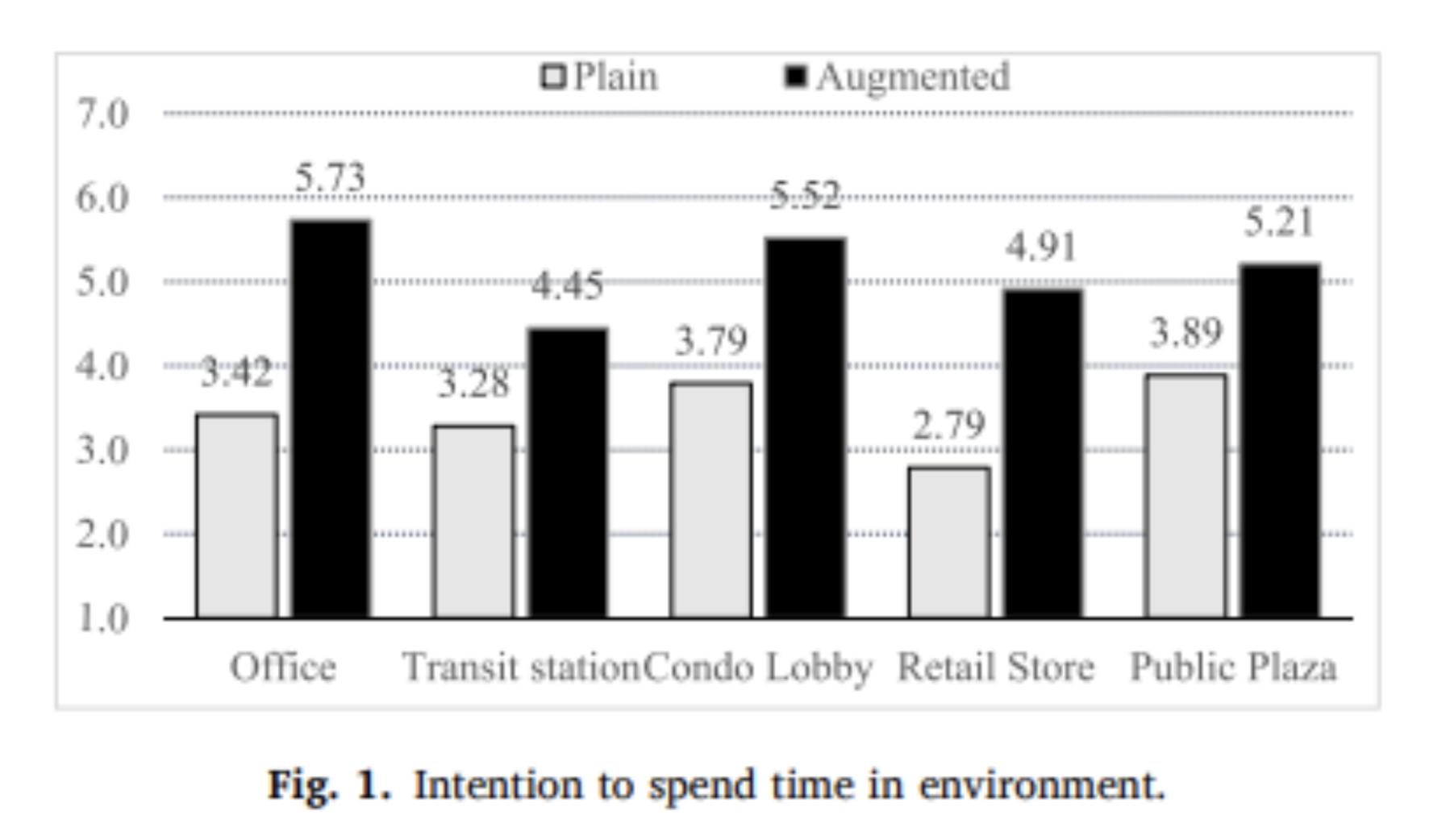
Figure 2. Data from a 2023 study by MASSIVart showed an increase in users’ intention to spend more time in the “augmented” (designed for placemaking) spaces versus the plain.
This idea is already being applied and finding success in various places across the county. The Livonia Public Library in New York saw a 42% increase in visits to the library after a redesign and expansion of the space was completed. Applications for new library cards jumped by 500%. “The public has responded enthusiastically to the new library,” Library Director Frank Sykes said in a statement to the press.
In Celina, Texas, an even larger project is currently underway including an entirely new library building equipped with multipurpose event space, large meeting rooms, and smaller, private nooks to provide quiet work or study spaces. The facility is a marrying of current growth needs and aspirational expansions to suit future needs and opportunities as the town grows. This includes a rooftop garden and event space, a courtyard for festivals, and a corner store for local businesses and artists to showcase and sell their merchandise. “The town’s motto is, ‘Life Connected,’” says lead project architect, Barton Drake. “They really wanted to create this space to connect people. People are hungry for that interaction.”
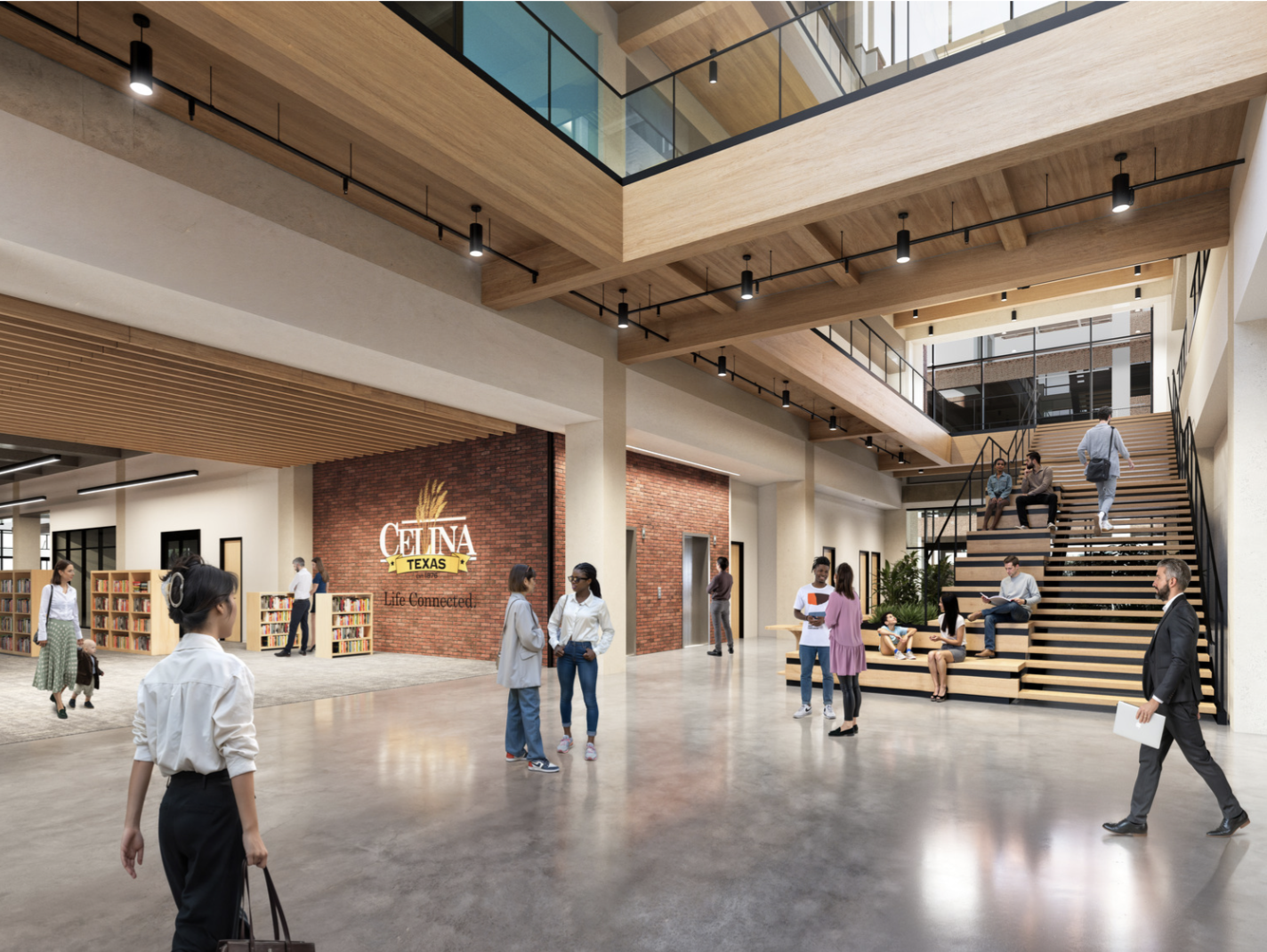
Figure 3. (a) Digital rendering of the Celina Downtown Center rooftop.
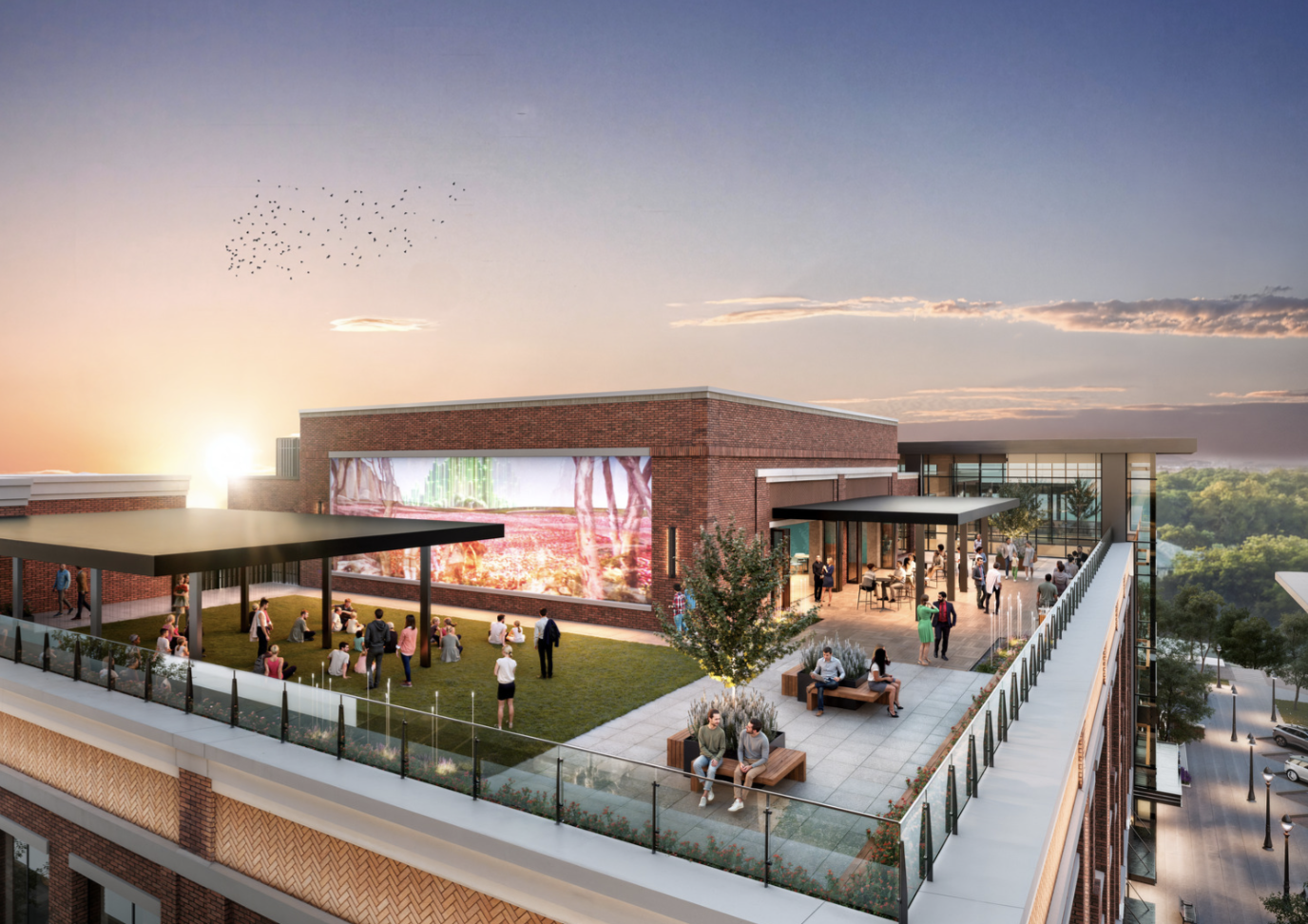
Figure 3. (b) Lobby.
These are positive examples of what can happen when libraries rethink how they position themselves, starting with the way they’re designed. By investing in a more thoughtful approach to design, the public library system can more strongly deliver on its community goals, increasing quality of life for its residents and value proposition to the town.
The New Public Space
Good design elevates the human experience by smartly considering how a space looks, feels, and functions for the user. Placemaking is a proven way to strengthen local identity, increase physical and psychological safety, and unlock more opportunities for adaptive and future-focused functionality. Most commonly, we see these principles allied to university campuses, large corporate campuses, and housing and mixed-use developments.
Imagine what they can do when applied to public libraries.
Designing for Look
Public spaces ought to be beautiful. Elements such as thoughtful landscaping, public art, and application of experiential graphics can make libraries delightful to the senses.
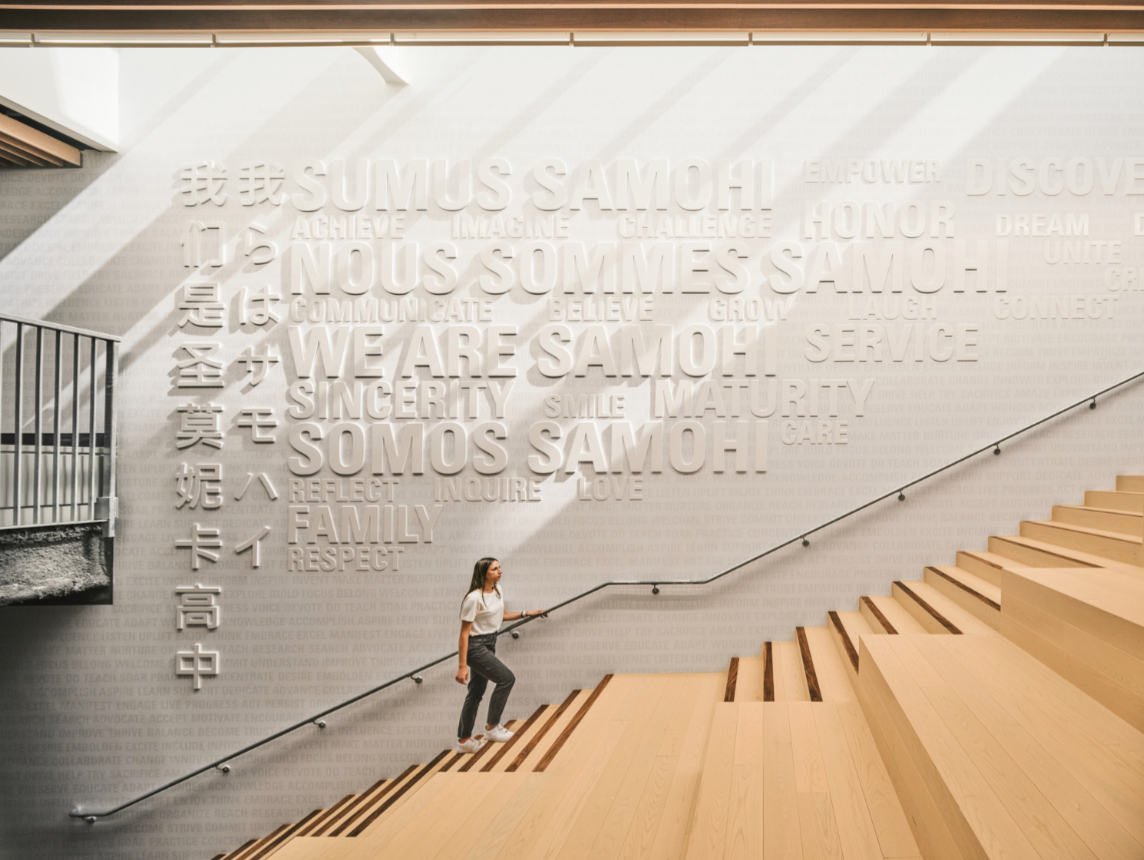
Figure 4. Large, experiential graphics like those in use at the Discovery Building at Santa Monica High School (Samohi) in Santa Monica, CA can foster a sense of belonging and pride in place when made authentic to and reflective of the community. Photo by HED.
Exterior landscape design should reflect the locale, integrating people, buildings, and nature into blended, seamless harmony. Including art installations (indoor or outdoor) can provide opportunities for artists to contribute or sell their work. And smart signage or brilliant graphics can add to the aesthetic appeal while providing useful information, signage, or local identity.
Cities that invest in these elements can improve the look of their libraries by promoting a sense of connection and identity where community members can find a sense of belonging and recognition. “[People] are seeking places that reflect the local character and culture,” says architect Kurt Volkman of HED. These principles apply strongly to public and shared spaces where there is a call to reimagine the user experience of a space by designing accordingly.
Designing for Feel
For public libraries to be a destination rather than a place of quick transaction, they should feel good to be in. Taking sensory awareness into account by adjusting acoustics for sound control and lighting for a natural setting can mean the difference between a visitor staying minutes or hours in an environment. For public spaces like libraries, these considerations are crucial improvements that can make a space feel safe and comfortable for visitors. Low ceilings, fluorescent lights, or a lack of natural lighting can make a space feel stuffy or even unsafe. For libraries to be a place to linger, attention must be given to the way the space feels to be in.
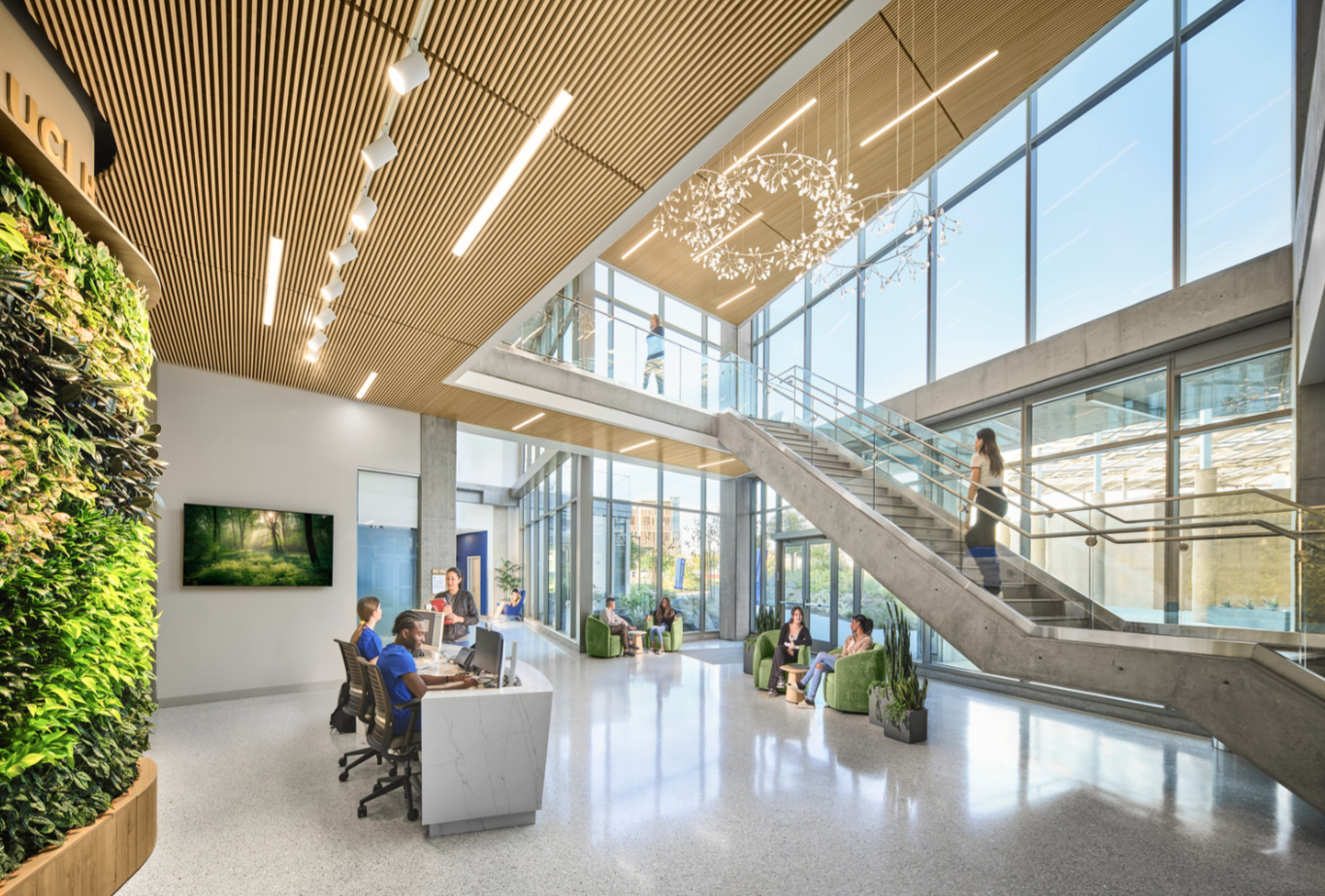
Figure 5. Biophilic design elements such as natural lighting, indoor plants, and organically shaped lighting features at the College of Health Sciences and Nursing at the University of California, Irvine, are improving wellness and user experience across the campus. Image by HED.
Another way to do this is by incorporating biophilic elements. Beyond exterior landscaping, bringing natural elements indoors can greatly enhance the atmosphere of a place.
This principle is heavily in use by the healthcare space. According to researchers from the National Social Science Foundation of China, they found that “By restoring the interaction between buildings and nature, biophilic design improves the quality of environments and the health of users.”
While already a popular design element in medical facilities, educational campuses, and workplaces, the science behind the implementation of natural elements can translate into all spaces.
Designing for Function
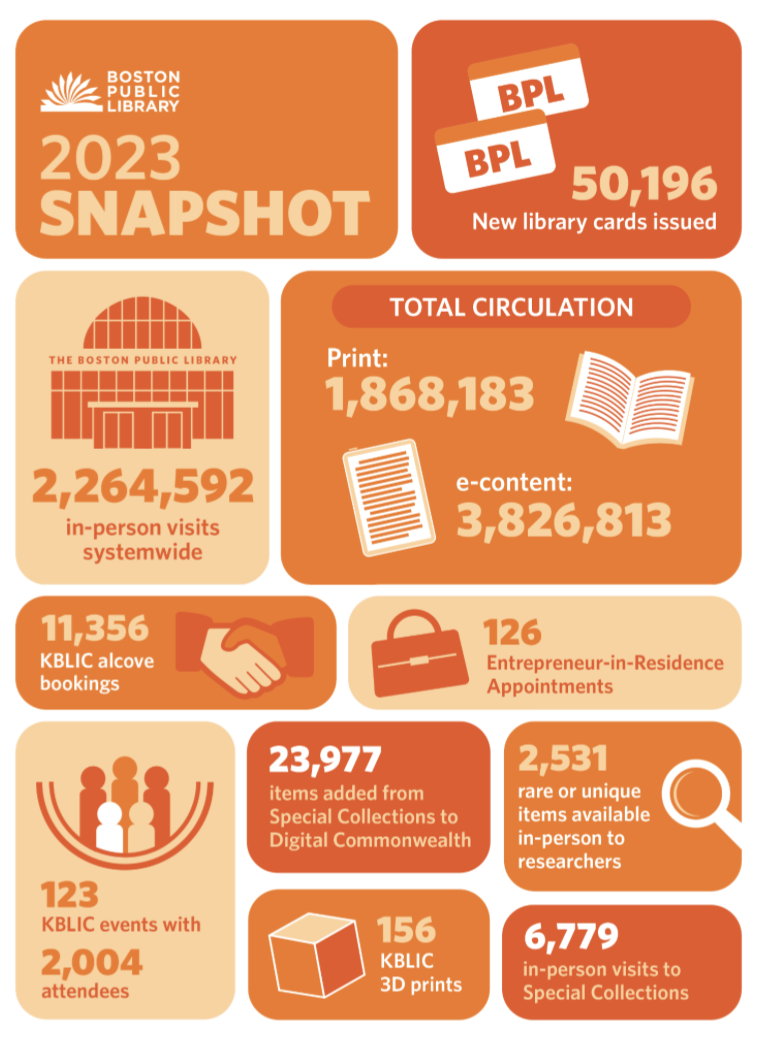
Figure 6. Stats from the Boston Public Library showing 2023 usage data including the hosting of 123 Kirstein Business Library & Innovation Center (KBLIC) events with over 2,000 attendees to its workshops, networking groups, and other functions.
Finally, libraries can improve visitation and use by designing for thoughtful function and making the space one of multi-use and vibrant engagement.
While meeting space may be currently available, increasing opportunities for personal or public use can open opportunities for better usage by community groups, local businesses, clubs, or other organizations.
Private pods or quiet spaces can better welcome remote workers, students, or entrepreneurs. Further, flexible space that can smartly transform into more multipurpose spaces can play host to greater events and functions with vendors and local businesses with evolving adaptability.
Business opportunities can flourish with temporary or permanent spaces for food and beverage vendors, local artists and craftsmen, and food trucks or mobile vendors.
Designing for this wider use of function benefits the community and local economy by bringing people together, building connections, providing ample opportunities for neighbors to mingle and cross new paths, meeting the needs of many who desire such vibrancy. This moves the space from a place of consumption to one of contribution.
Designing for the Future
Libraries need to rethink the way they see themselves and plan for a future that is already here. Rather than being a place for transaction, they must evolve (en masse) as a place for community. Cities like Celina, Texas are among those waking up to the ideas of building better and designing for civic engagement. The greatest opportunity for modern relevancy is thoughtfully designing these public spaces and environments that look, feel, and function smartly.
“Libraries are not just a place for books anymore,” County Supervisor Dianne Jacob told NBC 7 San Diego. “They're a place for children to do their homework. They're gathering places. And a lot of resources will come into this community as a result of the new library because it will be bigger and better.”
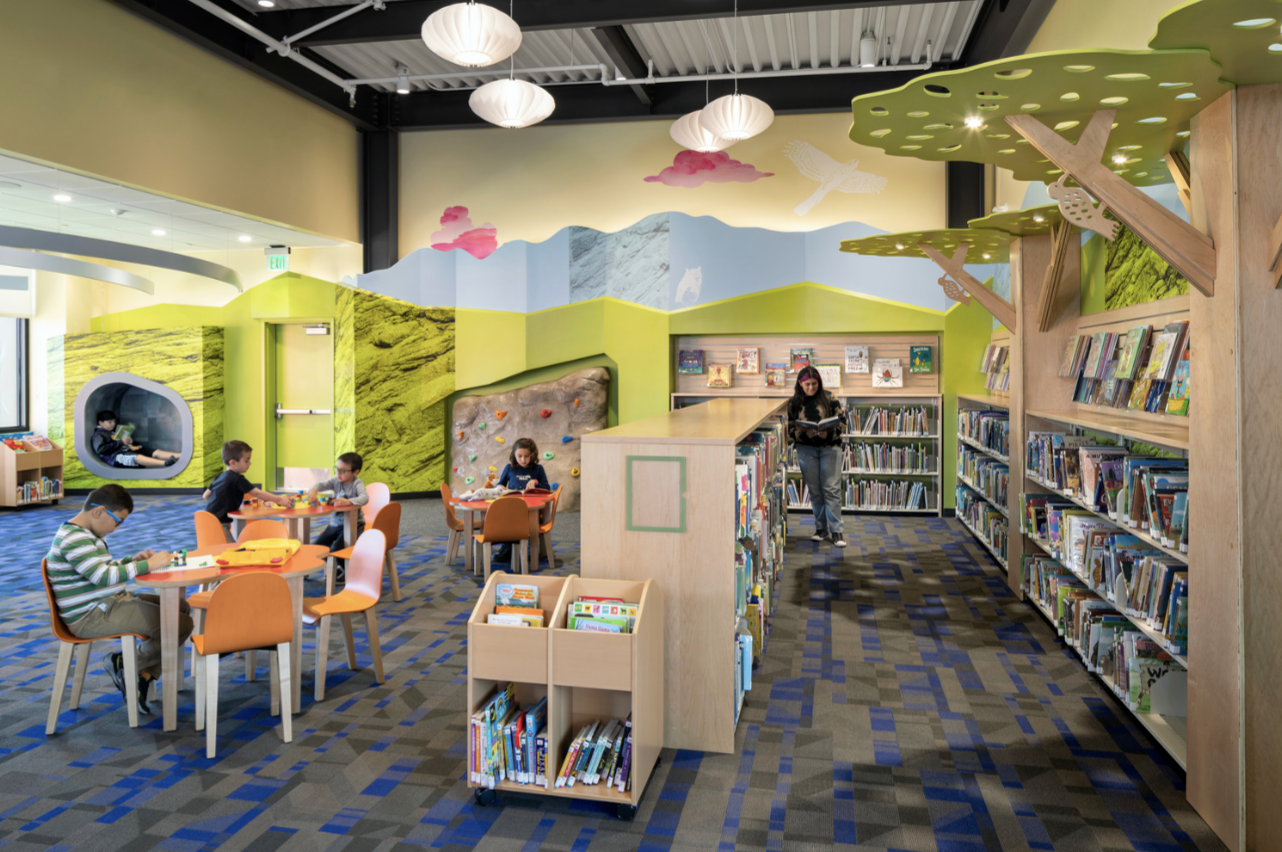
Figure 8. Reading room in County Lakeside Branch Library in Lakeside, CA.
Rather than focusing on merely expanding digital collections or pushing into existing demographics of members, the public library service ought to re-envision itself as an active, living community hub where people gather. “Despite the increase in remote services libraries offer, I think ‘the library as place’ is gaining in importance in the real world of library life,” writes Cheryl LaGuardia, a research librarian at Widener Library, Harvard University, underscoring this sentiment of libraries behind more than a building to merely house books. The way we access and engage with information has changed, and what’s needed now is something evolved.
Placemaking allows libraries to use smart design to rethink their positioning as a more community centric space and better meet the needs and expectations of our modern society—by becoming a “third place,” where people come together to learn, socialize, and grow in civic unity. A space that, through thoughtful design, delightfully welcomes residents to integrate with their community. Borrowing books, then, is but one useful commodity in this new civic vision.
The relevancy and usefulness of libraries are responsibilities in the hands of its investors and sole service recipients: we community members. Placemaking isn’t about forcing a one-size-fits-all solution onto spaces. It’s about considering what it means to design for a specific community in a specific location.
In considering his own experience with libraries and speaking on behalf of communities across the county, R. David Lankes, professor and scholar, put it best when he said, “Bad libraries build collections, good libraries build services, great libraries build communities.” Imagine what this could mean for your city next.
-
City of Celina. Downtown Center and Parking Garage. Accessed July 27, 2025. https://www.celina-tx.gov/1875/Downtown-Center-and-Parking-Garage.
City News Service. “County Leaders Announce Lakeside Library Construction Plans.” NBC 7 San Diego, November 25, 2020. Accessed July 27, 2025. https://www.nbcsandiego.com/news/local/county‑leaders‑announce‑lakeside‑library‑construction‑plans/2455411/.
CivicScience. “The Real Reason People Still Aren’t Going to Movie Theaters.” CivicScience, June 24, 2025. Accessed July 27, 2025. https://civicscience.com/the-real-reason-people-still-arent-going-to-movie‑theaters/.
Davis, Sarah. HR.com. “Workspaces with Soul: How Design Drives Belonging.” HR.com. Accessed July 27, 2025. https://www.hr.com/en/magazines/all_articles/workspaces-with-soul-how-design-drives-belonging-a_mbqzb5fj.html?s=-1.
Guskin, Emily, and Claire Cain Miller. “America’s Rise in Religious ‘Nones’—and What It Says About Faith.” The Atlantic, April 2024. Accessed July 27, 2025. https://www.theatlantic.com/ideas/archive/2024/04/america‑religion‑decline‑non‑affiliated/677951/.
LaGuardia, Cheryl. “Libraries, User Needs, and Aesthetics.” Library Journal, October 29, 2013. Accessed July 27, 2025. https://www.libraryjournal.com/story/libraries-user-needs-and-aesthetics-not-dead-yet.
Librarianship Studies. 2019. “Bad Libraries Build Collections, Good Libraries Build Services, Great Libraries Build Communities.” Librarianship Studies, March 27, 2019. Accessed August 5, 2025. https://www.librarianshipstudies.com/2019/03/bad‑libraries‑build‑collections‑good.html.
Massivart. “Augmenting Places: The Impact of Placemaking on Behavioral Intentions.” June 2025. PDF file, Massivart website. https://massivart.com/wp-content/uploads/2025/06/ROI_Placemaking.pdf.
Paprocki, Justin. “America’s Decline of In‑Person Shopping.” Gulfshore Business, April 1, 2024. Accessed July 27, 2025. https://www.gulfshorebusiness.com/americas-decline-of-in‑person-shopping/.
Pew Research Center. “How Americans Value Public Libraries in Their Communities.” Pew Research Center, December 11, 2013. Accessed July 27, 2025. https://www.pewresearch.org/internet/2013/12/11/libraries-in-communities/.
Project for Public Spaces. “The State of Public Space in 2025: Survey Results.” Project for Public Spaces, 2025. Accessed August 3, 2025. https://www.pps.org/state-of-public-space-2025.
Volkman, Kurt, and Shawn Henry. “Designing Destinations for Digital Natives.” HED, June 2025. Accessed August 3, 2025. https://hed.co/sites/default/files/2025-06/HED_Designing%20Destinations%20for%20Digital%20Natives.pdf.
Young, Catharine. “Senator Young Tours Newly Renovated Livonia Library.” Press release, New York State Senate, November 21, 2017. Accessed July 27, 2025. https://www.nysenate.gov/newsroom/press‑releases/2017/catharine‑young/senator‑young‑tours‑newly‑renovated‑livonia‑library.
Zhao, Yujia, Qi Zhan, and Tianjiao Xu. “Biophilic Design as an Important Bridge for Sustainable Interaction between Humans and the Environment: Based on Practice in Chinese Healthcare Space.” Computational and Mathematical Methods in Medicine 2022 (2022): Article ID 8184534. https://doi.org/10.1155/2022/8184534.
Graduate journalism coursework, Harvard University / 2025